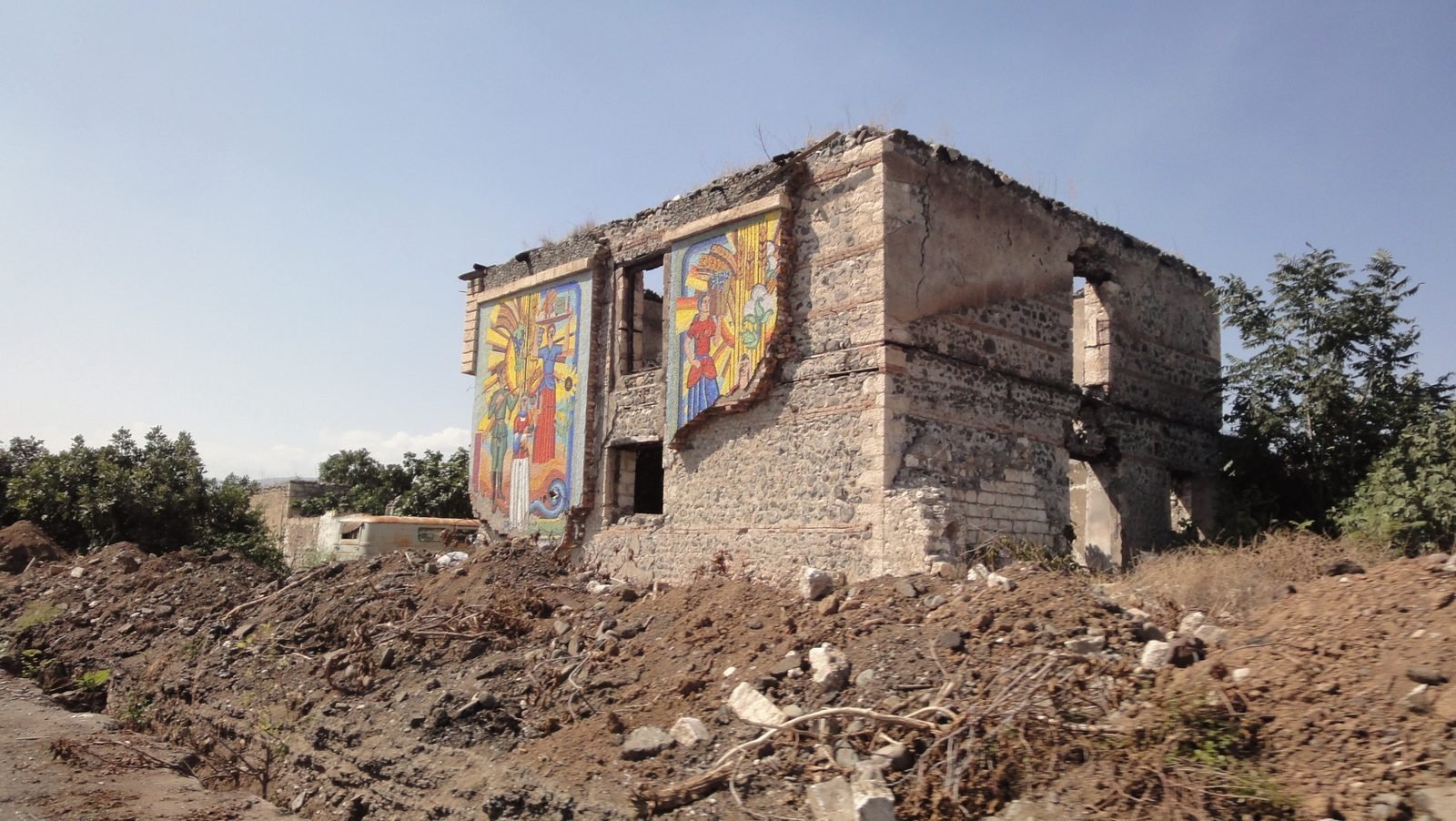
Heritage
A memory that cannot be destroyed
Houses and walls can be torn down, but culture is harder to destroy. Aghdam was a keeper of Karabakh traditions — from an ancient horse breed to mugham and carpet weaving. That memory outlived the years of desolation and is returning today along with the city.
Bread Museum
Opened in 1983 in an old mill, it told the story of grain and bread — one of only a few such museums in the world.
The Karabakh horse
An ancient breed of golden-chestnut horses, a symbol of Karabakh. Aghdam had a racecourse where they were bred and raced.
Mugham
The classical Azerbaijani musical art, inscribed by UNESCO on the heritage of humanity. Karabakh is one of its cradles.
Karabakh carpets
A recognisable school of Azerbaijani carpet weaving with distinctive patterns and colours — part of Karabakh identity.
Juma Mosque
An architectural monument of 1868–1870 by the architect Karbalayi Safikhan Karabakhi — the city’s main surviving symbol.
Theatre
Aghdam’s drama theatre was a centre of cultural life for the city and the whole region.
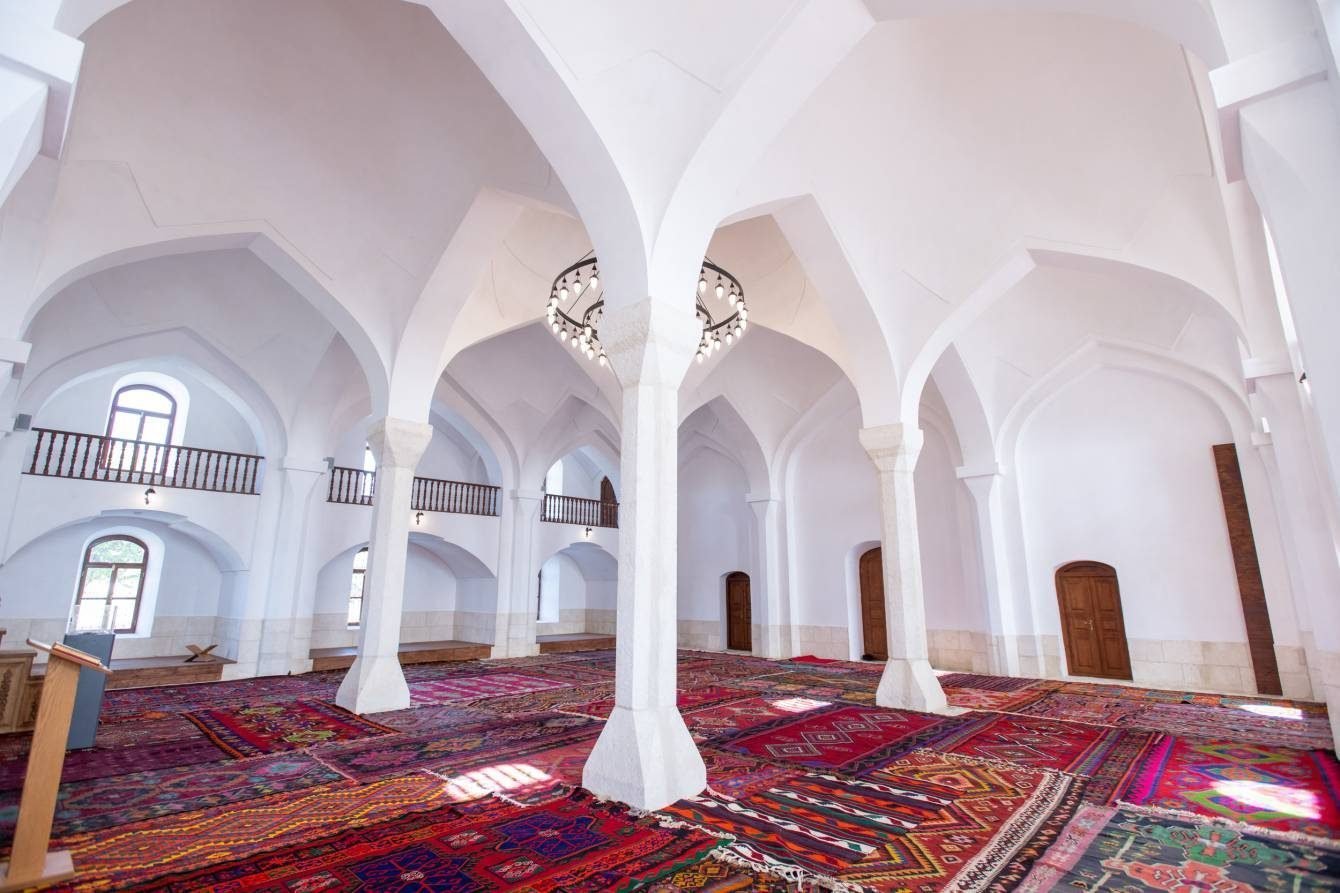 Juma Mosque, interior
Architecture
The hand of master Karabakhi
Aghdam’s Juma Mosque was built in 1868–1870 to the design of Karbalayi Safikhan Karabakhi — the most famous Karabakh architect of the 19th century, whose mosques stand across the region.
Two slender minarets and finely judged proportions made it one of the city’s landmarks. After 2020 the mosque was restored, returning it to its original appearance.