Silence
How a city became a ghost
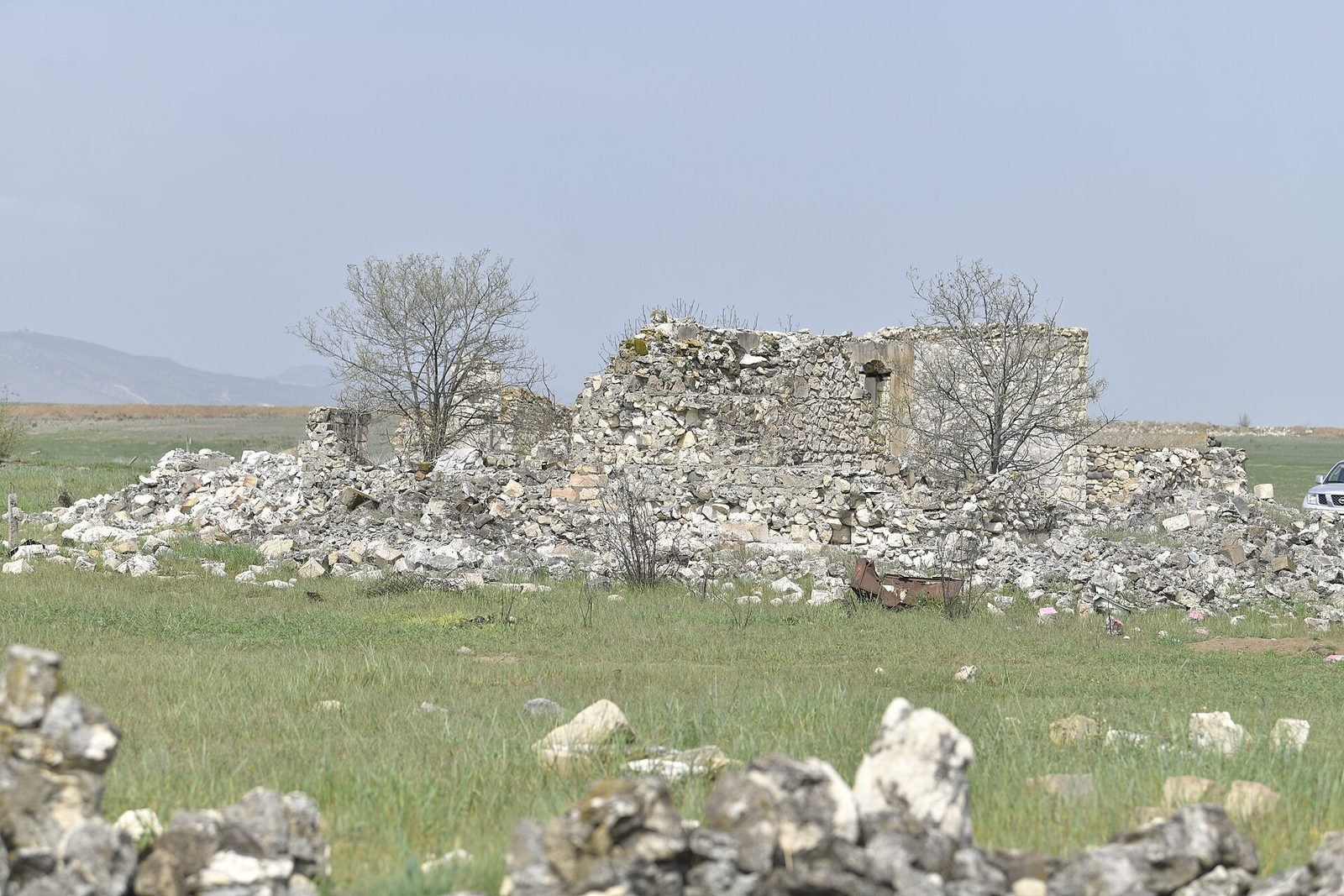
On 23 July 1993, during the First Karabakh War, Aghdam was seized. Tens of thousands of residents became refugees overnight, leaving behind homes, schools and the graves of their ancestors. The city emptied.
In the years that followed Aghdam was not merely deserted — it was methodically dismantled. Houses were stripped for bricks, metal and building materials, and everything of value was carried off. By the end of the occupation only bare walls and foundations remained amid overgrown grass.
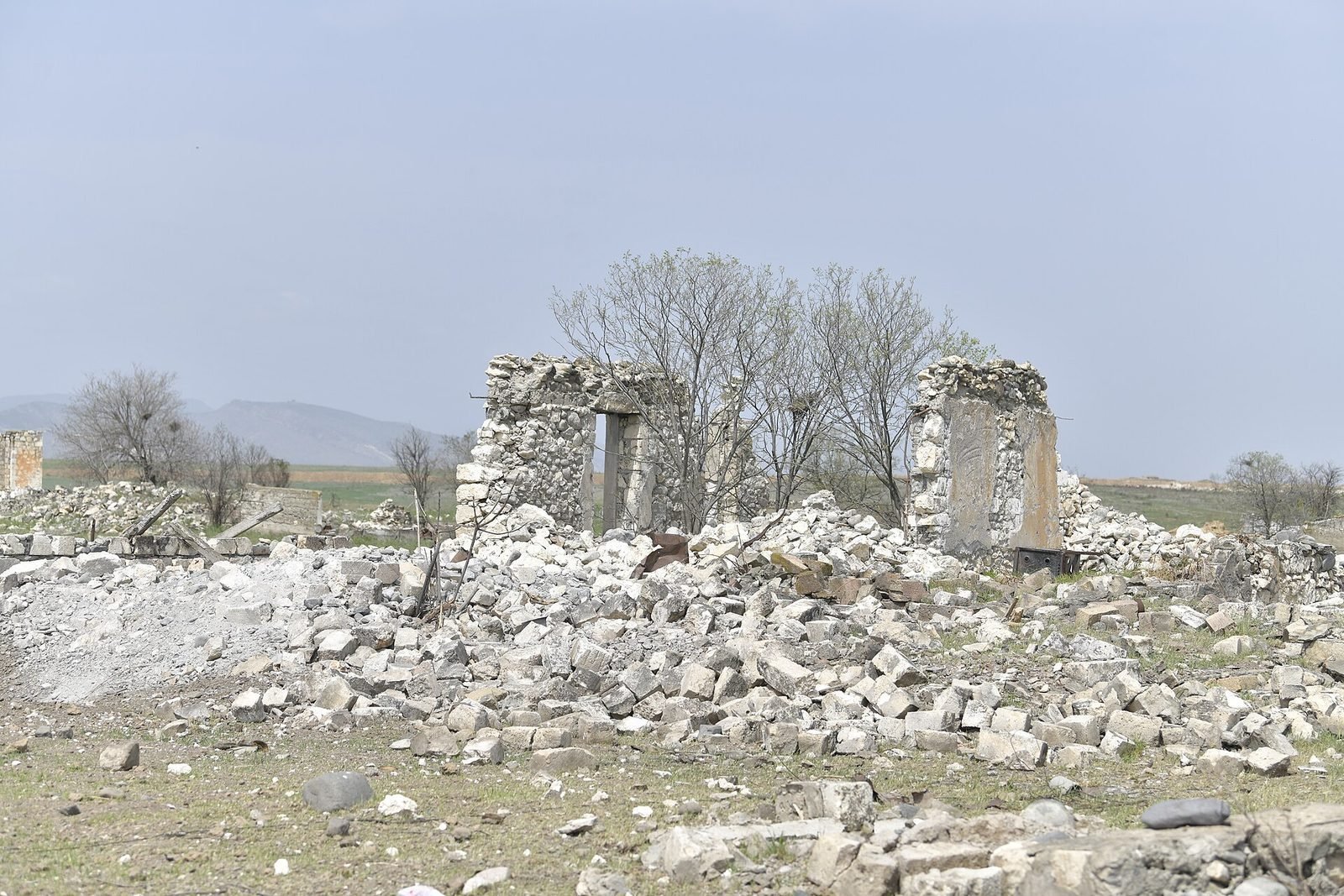 Residential quarters
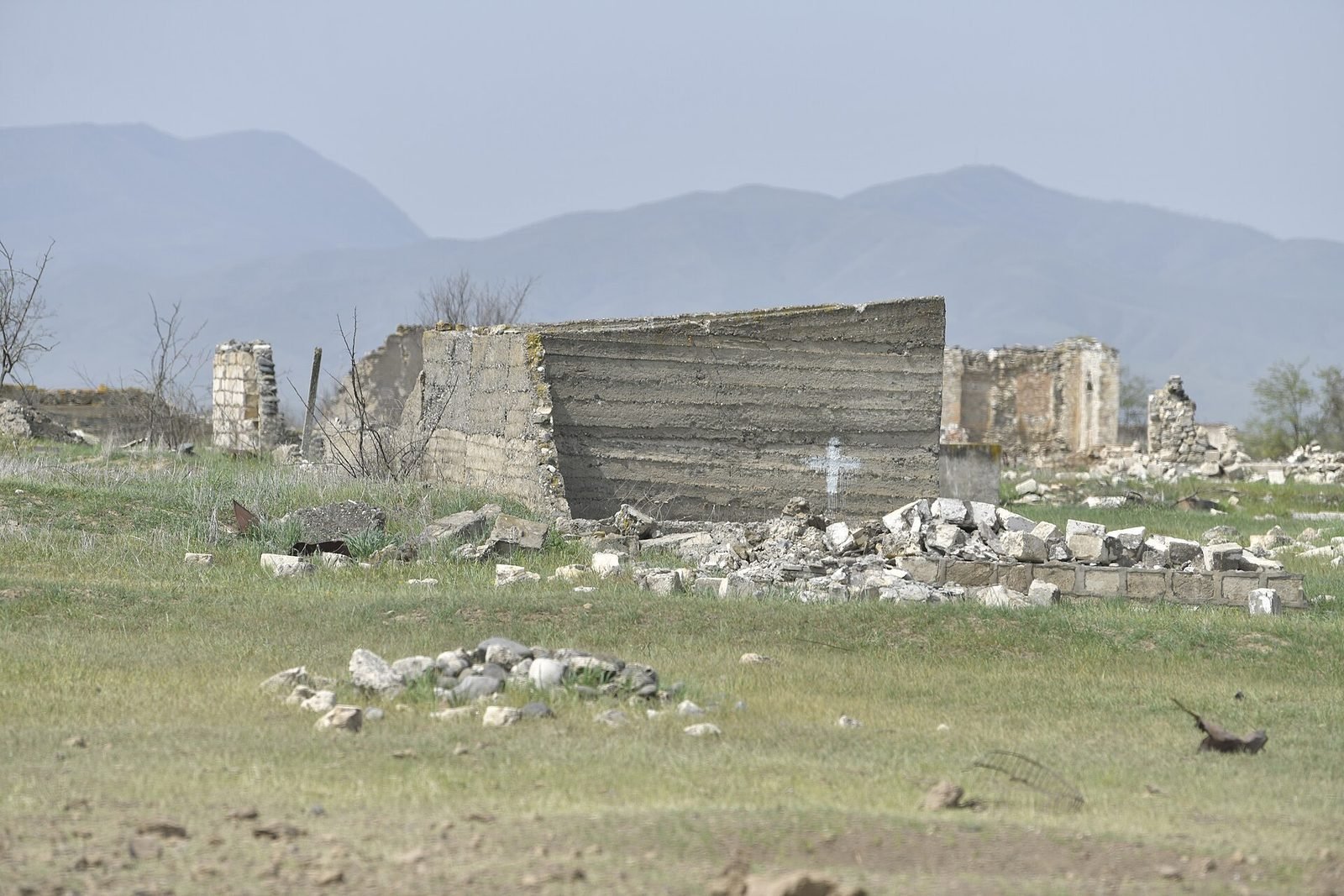 City centre
Foreign journalists who reached the closed zone described Aghdam as an apocalyptic landscape and compared it to Hiroshima. The “Hiroshima of the Caucasus” — that name stuck to the city in the world press.
The area was mined, which made even the ruins deadly. The return of people remained impossible for decades — Aghdam became a symbol of the lost home for an entire generation.
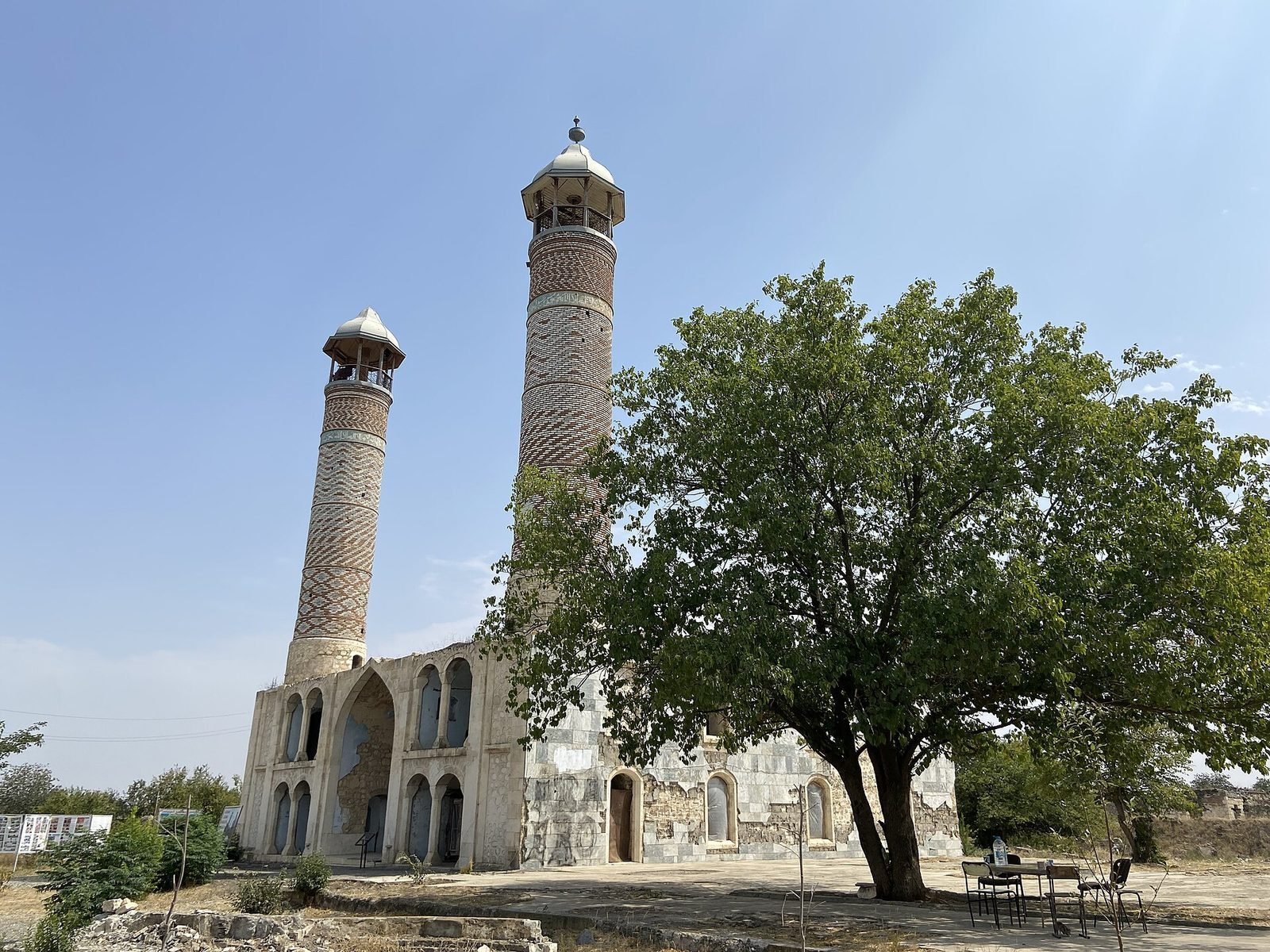 Juma Mosque
What stood
The silhouette that survived
Amid almost total devastation one large building survived — the Juma Mosque of 1868–1870. Its two minarets kept rising above the ruins all those years.
During the occupation the mosque was desecrated: by accounts, cattle were kept inside. And yet it stood — and became the image of a city that refused to vanish without a trace.